
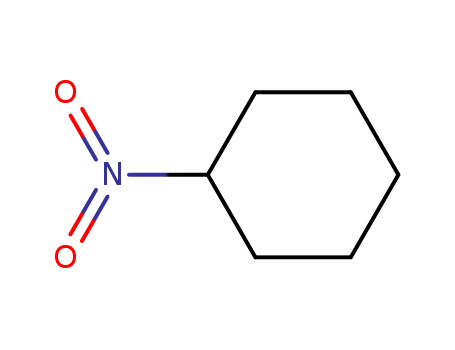
Details
Buy reliable Quality NITROCYCLOHEXANE 1122-60-7 raw material with Honest Price
- Molecular Formula: C6H11 N O2
- Molecular Weight: 129.159
- Vapor Pressure: 768 mm Hg ( 205 °C)
-
Melting Point:
−34 °C(lit.)
- Refractive Index: n20/D 1.462(lit.)
-
Boiling Point:
205.5-206 °C768 mm Hg(lit.)
- PKA: 8.44±0.20(Predicted)
- Flash Point: 81.2°C
- PSA: 45.82000
- Density: 1.05g/cm3
- LogP: 2.11900
NITROCYCLOHEXANE(Cas 1122-60-7) Usage
|
Synthesis Reference(s) |
Journal of the American Chemical Society, 75, p. 4047, 1953 DOI: 10.1021/ja01112a049Tetrahedron, 46, p. 7443, 1990 DOI: 10.1016/S0040-4020(01)89059-1Tetrahedron Letters, 21, p. 1117, 1980 DOI: 10.1016/S0040-4039(01)83928-9 |
|
Air & Water Reactions |
Highly Flammable |
|
Reactivity Profile |
Nitroalkanes, such as NITROCYCLOHEXANE, range from slight to strong oxidizing agents. If mixed with reducing agents, including hydrides, sulfides and nitrides, they may begin a vigorous reaction that culminates in a detonation. Nitroalkanes are milder oxidizing agents, but still react violently with reducing agents at higher temperature and pressures. Nitroalkanes react with inorganic bases to form explosive salts. The presence of metal oxides increases the thermal sensitivity of nitroalkanes. Nitroalkanes with more than one nitro group are generally explosive. Nitroalkanes are insoluble in water. Flammable/combustible material. May be ignited by heat, sparks or flames. |
|
Potential Exposure |
Used in organic synthesis. |
|
Shipping |
UN3382 Toxic by inhalation liquid, n.o.s. with an LC50 lower than or equal to 1000 ml/m3 and saturated vapor concentration ≥10 LC50, Hazard Class: 6.1; Labels: 6.1 Technical Name Required, Inhalation Hazard Zone B. |
|
Incompatibilities |
A nitro compound; a fire and explosive hazard. May form explosive mixture with air. Nitrocyclohexane, a nitroalkane, is a strong oxidizing agents. If mixed with reducing agents, including hydrides, sulfides and nitrides, they may begin a vigorous reaction that culminates in a detonation. Nitroalkanes are milder oxidizing agents, but still react violently with reducing agents at higher temperature and pressures. Nitroalkanes react with inorganic bases to form explosive salts. The presence of metal oxides increases the thermal sensitivity of nitroalkanes. Nitroalkanes with more than one nitro group are generally explosive. Incompatible with alkalis, and metal oxides. This chemical is highly reactive and may be heat-and shock-sensitive. |
|
Waste Disposal |
Dissolve or mix the material with a combustible solvent and burn in a chemical incinerator equipped with an afterburner and scrubber. All federal, state, and local environmental regulations must be observed. |
|
General Description |
Nitrocyclohexane is a nitroalkane derivative that can be synthesized through various methods, including the reduction of 1,1-dinitrocyclohexane, where it forms as a product alongside other compounds like 1,1′-dinitrobicyclohexyl. It is also produced selectively in the vapor-phase catalytic nitration-oxidation of cyclohexane with NO2 , yielding nitrocyclohexane and adipic acid. NITROCYCLOHEXANE exhibits reactivity in electron transfer reactions, where its radical intermediates participate in chain reactions. Additionally, nitrocyclohexane can be derived from the reduction of gem-bromonitro compounds or through the oxidation of azides using HOF·CH3 CN. These synthetic routes highlight its versatility as an intermediate in organic transformations. |
|
Definition |
ChEBI: A C-nitro compound that is cyclohexane in which a single hydrogen is replaced by a nitro group. |
InChI:InChI=1/C6H11NO2/c8-7(9)6-4-2-1-3-5-6/h6H,1-5H2
1122-60-7 Relevant articles
Zeolite (H-ZSM 5)-catalysed reduction of conjugated nitroalkenes with sodium cyanoborohydride
Gupta, Anuradha,Haque, Azizul,Vankar, Yashwant D.
, p. 1653 - 1654 (1996)
Conjugated nitroalkenes are readily redu...
Direct and Efficient Preparation of gem-Chloronitro Compounds or Nitro Compounds from gem-Bromonitro Compounds
Amrollah-Madjdabadi, A.,Beugelmans, R.,Lechevallier, A.
, p. 826 - 828 (1986)
Sodiumethanethiolate in methanol is an e...
Fast cleavage reactions following electron transfer. Reduction of 1,1-dinitrocyclohexane
Rühl, Janet C.,Evans, Dennis H.,Hapiot, Philippe,Neta, Pedatsur
, p. 5188 - 5194 (1991)
One-electron reduction of 1,1-dinitrocyc...
From azides to nitro compounds in a few seconds using HOF·CH3CN
Rozen, Shlomo,Carmeli, Mira
, p. 8118 - 8119 (2003)
HOF·CH3CN, a very efficient oxygen-trans...
Highly selective co-production of nitrocyclohexane and adipic acid from vapor phase catalytic nitration-oxidation of cyclohexane with NO2
You, Kuiyi,Jian, Jian,Xiao, Haijun,Liu, Pingle,Ai, Qiuhong,Luo, He'An
, p. 174 - 178 (2012)
A simple and efficient approach for high...
Structure, Synthesis, and Properties of Some Persubstituted 1,2-Dinitroethanes. In Quest of Nitrocyclopropyl-Anion Derivatives
Kai, Yasushi,Knochel,Paul,Kwiatkowski, Stefan,Dunitz, Jack D.,Oth, Jean F. M.,et al.
, p. 137 - 161 (1982)
Attempts to deprotonate nitrocyclopropan...
SELECTIVE C-C BOND HYDROGENATION IN UNSATURATED NITRO COMPOUNDS IN THE PRESENCE OF THE RhCl3-ALIQUAT 336 CATALYST SYSTEM
Amer, Ibrahim,Bravdo, Tamar,Blum, Jochanan,Vollhardt, K. Peter C.
, p. 1321 - 1322 (1987)
The ion pair formed from aqueous rhodium...
-
Emmons,Pagano
, p. 4557 (1955)
-
New Method for the Facile Reduction of α-Nitro Sulfones to Nitroalkanes via an Electron-Transfer-Hydrogen Atom Abstraction Mechanism
Chen, Jian,Tanner, Dennis D.
, p. 3897 - 3900 (1988)
The mechanism for the reduction of sever...
Structural insights into the ene-reductase synthesis of profens
Waller,Toogood,Karuppiah,Rattray,Mansell,Leys,Gardiner,Fryszkowska,Ahmed,Bandichhor,Reddy,Scrutton
, p. 4440 - 4448 (2017)
Reduction of double bonds of α,β-unsatur...
-
Bachmann,Chupp
, p. 655 (1956)
-
Method for co-producing adipic acid and cyclohexanone-oxime from cyclohexane
-
Paragraph 0100-0107, (2021/06/13)
The invention relates to a method for co...
Ozone-Mediated Amine Oxidation and Beyond: A Solvent-Free, Flow-Chemistry Approach
Skrotzki, Eric A.,Vandavasi, Jaya Kishore,Newman, Stephen G.
supporting information, p. 14169 - 14176 (2021/06/30)
Ozone is a powerful oxidant, most common...
Nitroalkene reduction in deep eutectic solvents promoted by BH3NH3
Benaglia, Maurizio,Boselli, Monica Fiorenza,Faverio, Chiara,Gonzalez, Patricia Camarero,Puglisi, Alessandra
supporting information, p. 1041 - 1047 (2021/05/17)
Deep eutectic solvents (DESs) have gaine...
Preparation method of cyclohexanone oxime
-
Paragraph 0067-0071, (2021/06/13)
The invention relates to a preparation m...
1122-60-7 Process route
-

-
110-82-7,25012-93-5
cyclohexane

-
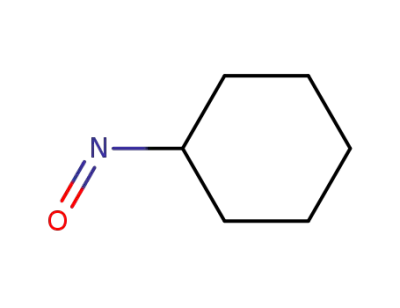
-
2696-95-9
nitrosocyclohexane

-

-
1122-60-7
1-nitrocyclohexane
| Conditions | Yield |
|---|---|
|
With
tert.-butylnitrite; N-hydroxyphthalimide;
In
tetradeuterioacetic acid;
at 80 ℃;
for 2h;
Further Variations:;
Solvents;
Temperatures;
Reagents;
reaction times;
Product distribution;
|
64%
|
-

-
56-23-5
tetrachloromethane
-
-
110-82-7,25012-93-5
cyclohexane
-

-
542-18-7
cyclohexyl chloride
-
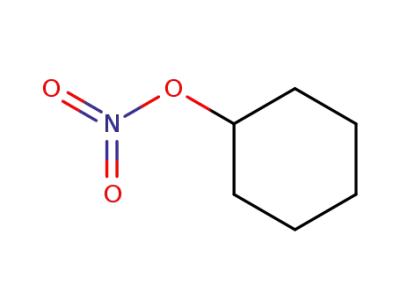
-
2108-66-9
cyclohexyl nitrate
-
-
1122-60-7
1-nitrocyclohexane
| Conditions | Yield |
|---|---|
|
at 0 ℃;
Kinetics;
sowie bei 20grad;
|
1122-60-7 Upstream products
-
100-64-1
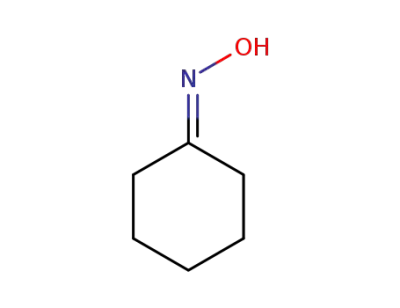
cyclohexanone-oxime
-
110-82-7
cyclohexane
-
626-62-0

Cyclohexyl iodide
-
29788-20-3
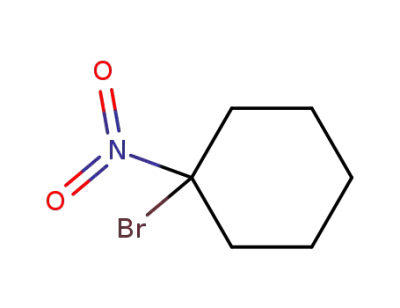
1-bromo-1-nitrocyclohexane
1122-60-7 Downstream products
-
105337-50-6
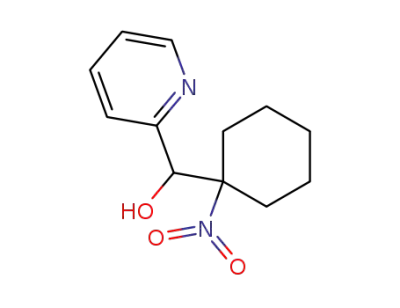
(1-Nitro-cyclohexyl)-[2]pyridyl-methanol
-
77280-42-3
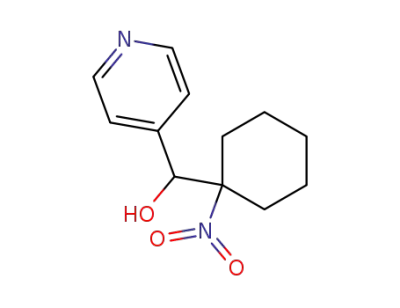
(1-Nitro-cyclohexyl)-[4]pyridyl-methanol
-
132157-70-1
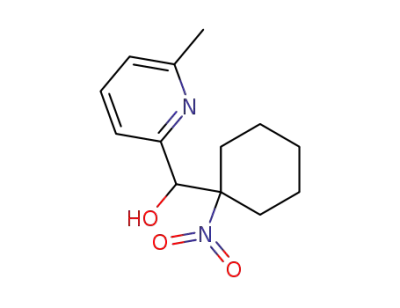
(6-Methyl-[2]pyridyl)-(1-nitro-cyclohexyl)-methanol
-
110459-04-6
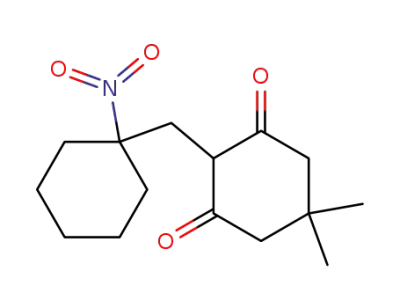
5,5-dimethyl-2-(1-nitro-cyclohexylmethyl)-cyclohexane-1,3-dione
Related Products
-
-
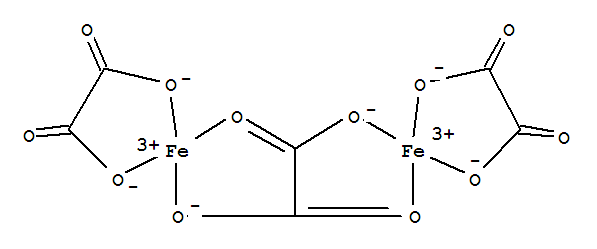 Ferric oxalate
CAS:2944-66-3
-
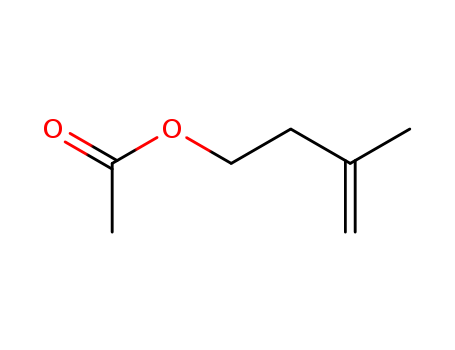 3-Buten-1-ol, 3-methyl-, acetate
CAS:5205-07-2